
An Ethical home linen
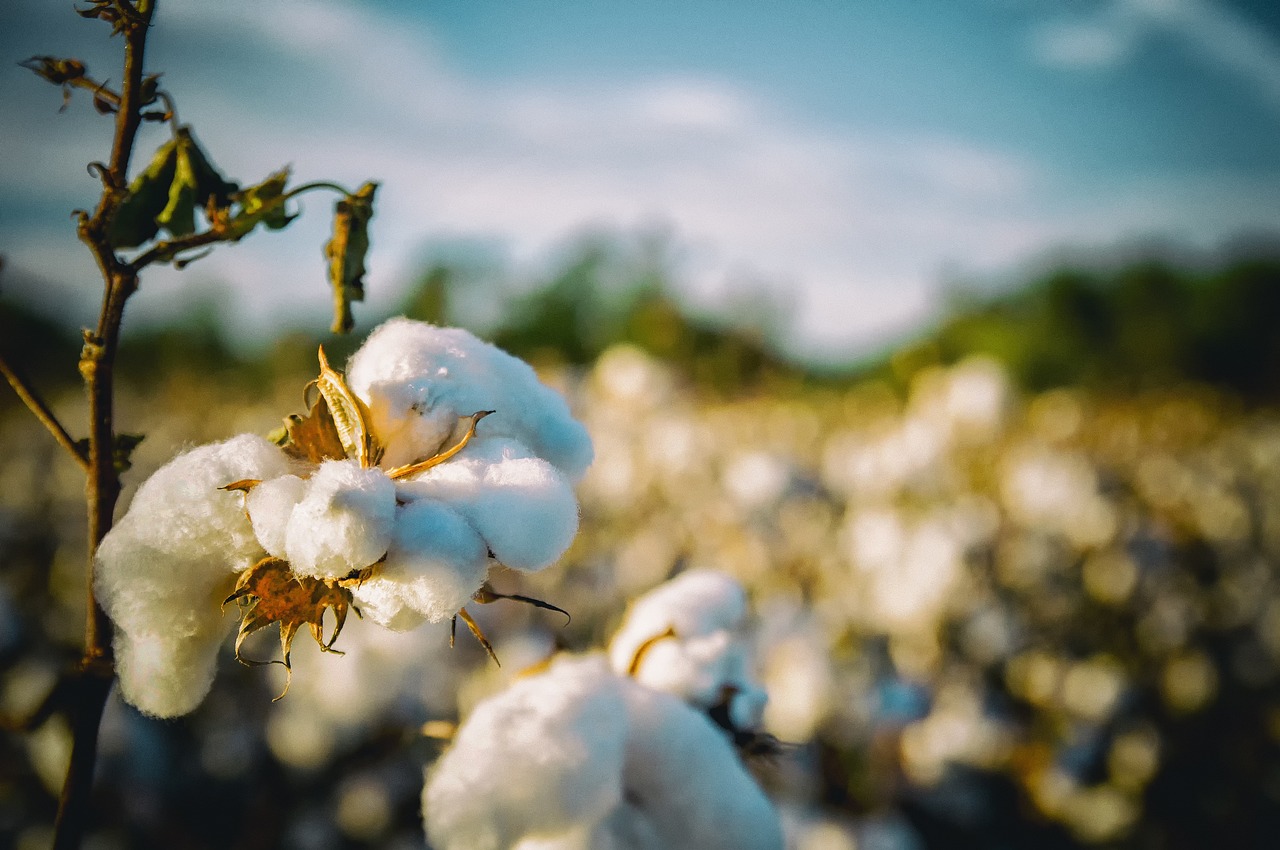
Ethics and Commitment
Ce qui constitue, en premier lieu, l’être actuel de l’esprit humain n’est rien d’autre que l’idée d’une chose singulière existant en acte.
BARUCH SPINOZA
CIRCULAR ECONOMY & CREATIVITY = INNOVATION

NeNa Neffati is committed to propose products that are in line with your values and lifestyle. Our environmental concerns make us committed to have a positive ecological impact and to preserve a better nature for future generations.
This is why NeNa Neffati has decided to launch her own brand of Home Linens and to collaborate with European producers who share the same principles.
Therefore, we pay attention to:
Social economy.
Sustainable solutions.
Minimal carbon footprint.
Conscious production practices.
Renewable energies including solar energy.
Recyclable yarns and new sustainable fibers.
Matières premières & biodégradation
For as long as she can remember, NeNa Neffati has been deeply aware of the impact of our actions on the environment and, consequently, on the planet. Her creativity has always driven her to prioritize the use of existing resources to create new useful and practical products. Recycling existing materials provides personal satisfaction, promotes a circular economy, and opposes overconsumption.
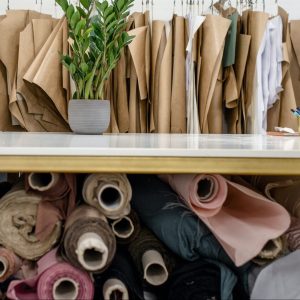
The textile industry has been aware for several years of the need to contribute to the preservation of the planet by reducing its pollution impact. This is why it is actively engaged in the search for new sustainable fibers. This quest and determination have led to the emergence of an innovative fiber made from cellulose raw materials and biodegradable, known as paper fiber.
NeNa Neffati's Home Linen is partially composed of this handcrafted fiber, from wood pulp and renowned for its exceptional quality. Lightweight, durable, uniform, and highly absorbent, it also exhibits good water resistance, easy drying, and compatibility with cotton.
Its production process uses no harmful substances for the environment. It is biodegradable, reusable, and, therefore, highly eco-friendly.
To demonstrate its commitment to quality and sustainability, the NeNa Neffati brand introduced its Marie-Louise collection on the market, composed of 45% paper fiber and 55% cotton. collection Marie-Louise constituée de 45% de fibre de papier et de 55% de coton.
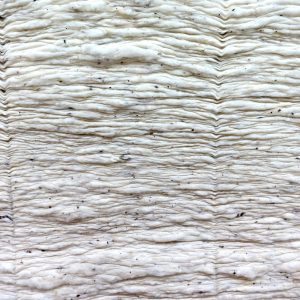
Enormous quantities of fabric are discarded in the textile industry. However, today, thanks to technological advancements, fabrics can be recycled and reintegrated into the market.This is the case of cotton.
Recycling pre or post-consumer cotton waste (meaning the fabric remnants from cotton product manufacturing or textiles already used by consumers) requires a very specific production process.
In practice, recycling pre-consumer waste is easier to accomplish than post-consumer waste because that one requires particular attention.
First, it's necessary to correctly select the cotton mixed with other materials such as polyester, viscose, etc.
Next, they must be separated by type and color before being shredded, all without the addition of chemicals, dyes, or water. This approach significantly reduces water consumption compared to the production of regular cotton.
Furthermore, this process uses no harmful substances, unlike conventional cotton, which accounts for about 16% of the world's insecticide and 7% of pesticide usage.
Finally, it also contributes to reducing energy consumption, greenhouse gas emissions, and CO2.
This process leads to the creation of a raw cotton fiber that must be further refined to achieve the desired thickness. It is then spun again to create a yarn similar to that of traditional cotton.
However, the recycling process makes short fibers difficult to spin. This means that recycled cotton must be mixed with virgin fibers, such as paper fiber.
Ultimately, once the fibers are transformed into a new yarn, the fabric is produced. It will have a more artisanal appearance, and each batch of recycled cotton will have its own identity.
Once again, the NeNa Neffati brand has incorporated organic cotton into its new Roch collection. This decision is inherently evident and aligns perfectly with its eco-responsible approach.
Emballage & livraison
NeNa Neffati also embodies the philosophy of green logistics, which refers to a set of practices and strategies aimed at reducing waste production and, consequently, the environmental impact of the delivery and logistics chain.
This includes:
Eco-Friendly Packaging Management using recycled paper, which is itself recyclable once its purpose is fulfilled.
Reduction of the Packaging, by decreasing it ‘s ‘weight and volume through the design of more compact packages and flatter boxes that efficiently utilize available space and fit closely to the item.
Use of Biodegradable Tape instead of plastic tape.
Optimized Delivery Routes for energy efficiency.
Minimizing unnecessary travel, resulting in slightly longer delivery times but much more responsible practices, including collaborative and last-mile deliveries.
Environmentally friendly transportation through collaborations with eco-conscious companies, including hybrid and electric vans and bicycle couriers.
Promotion of Eco-Friendly practices by encouraging and promoting eco-friendly practices and providing in-store collection points, offering to the customers time and geographical flexibility.
Efficient management of returns by raising awareness among individuals about their essential role. By minimizing returns, carbon emissions related to transportation and waste management are reduced.
This green logistics completes the ethical approach of NeNa Neffati's brand.
 EN
EN  FR
FR